PDF Download Art of the Start 2.0: The Time-Tested, Battle-Hardened Guide for Anyone Starting Anything, by GUY KAWASAKI
By reviewing this publication Art Of The Start 2.0: The Time-Tested, Battle-Hardened Guide For Anyone Starting Anything, By GUY KAWASAKI, you will get the very best point to get. The brand-new thing that you do not should spend over cash to get to is by doing it alone. So, what should you do now? See the web link web page and also download the publication Art Of The Start 2.0: The Time-Tested, Battle-Hardened Guide For Anyone Starting Anything, By GUY KAWASAKI You can obtain this Art Of The Start 2.0: The Time-Tested, Battle-Hardened Guide For Anyone Starting Anything, By GUY KAWASAKI by online. It's so very easy, isn't really it? Nowadays, innovation actually supports you tasks, this on the internet e-book Art Of The Start 2.0: The Time-Tested, Battle-Hardened Guide For Anyone Starting Anything, By GUY KAWASAKI, is also.
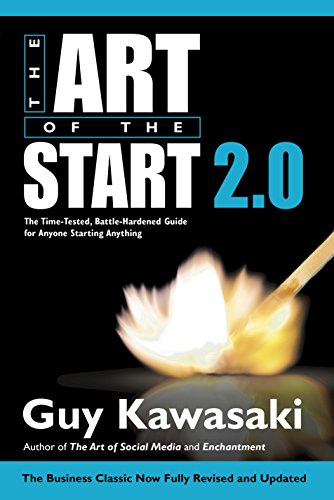
Art of the Start 2.0: The Time-Tested, Battle-Hardened Guide for Anyone Starting Anything, by GUY KAWASAKI

PDF Download Art of the Start 2.0: The Time-Tested, Battle-Hardened Guide for Anyone Starting Anything, by GUY KAWASAKI
Imagine that you obtain such particular spectacular encounter and also expertise by just checking out an e-book Art Of The Start 2.0: The Time-Tested, Battle-Hardened Guide For Anyone Starting Anything, By GUY KAWASAKI. How can? It seems to be greater when an e-book can be the most effective thing to find. Publications now will certainly appear in published and soft file collection. One of them is this publication Art Of The Start 2.0: The Time-Tested, Battle-Hardened Guide For Anyone Starting Anything, By GUY KAWASAKI It is so typical with the published books. Nevertheless, numerous people often have no room to bring the e-book for them; this is why they can't read the publication anywhere they really want.
Why must be publication Art Of The Start 2.0: The Time-Tested, Battle-Hardened Guide For Anyone Starting Anything, By GUY KAWASAKI Publication is one of the very easy sources to seek. By getting the author and style to obtain, you can locate a lot of titles that provide their information to acquire. As this Art Of The Start 2.0: The Time-Tested, Battle-Hardened Guide For Anyone Starting Anything, By GUY KAWASAKI, the inspiring book Art Of The Start 2.0: The Time-Tested, Battle-Hardened Guide For Anyone Starting Anything, By GUY KAWASAKI will offer you just what you should cover the job deadline. And why should be in this internet site? We will ask initially, have you a lot more times to choose shopping guides and look for the referred publication Art Of The Start 2.0: The Time-Tested, Battle-Hardened Guide For Anyone Starting Anything, By GUY KAWASAKI in book establishment? Many individuals could not have enough time to locate it.
For this reason, this web site offers for you to cover your issue. We show you some referred publications Art Of The Start 2.0: The Time-Tested, Battle-Hardened Guide For Anyone Starting Anything, By GUY KAWASAKI in all kinds as well as motifs. From typical author to the popular one, they are all covered to supply in this site. This Art Of The Start 2.0: The Time-Tested, Battle-Hardened Guide For Anyone Starting Anything, By GUY KAWASAKI is you're looked for publication; you simply need to visit the link page to display in this website then opt for downloading. It will not take many times to get one publication Art Of The Start 2.0: The Time-Tested, Battle-Hardened Guide For Anyone Starting Anything, By GUY KAWASAKI It will certainly rely on your internet link. Simply purchase and download the soft data of this publication Art Of The Start 2.0: The Time-Tested, Battle-Hardened Guide For Anyone Starting Anything, By GUY KAWASAKI
It is so simple, isn't it? Why do not you try it? In this website, you could also discover other titles of the Art Of The Start 2.0: The Time-Tested, Battle-Hardened Guide For Anyone Starting Anything, By GUY KAWASAKI book collections that may have the ability to help you locating the very best solution of your task. Reading this book Art Of The Start 2.0: The Time-Tested, Battle-Hardened Guide For Anyone Starting Anything, By GUY KAWASAKI in soft data will likewise ease you to obtain the source easily. You could not bring for those books to someplace you go. Only with the gadget that always be with your anywhere, you can read this book Art Of The Start 2.0: The Time-Tested, Battle-Hardened Guide For Anyone Starting Anything, By GUY KAWASAKI So, it will be so rapidly to finish reading this Art Of The Start 2.0: The Time-Tested, Battle-Hardened Guide For Anyone Starting Anything, By GUY KAWASAKI
Whether you're an entrepreneur, intrapreneur, or not-for-profit leader, there's no shortage of advice on such topics as writing a business plan, recruiting, raising capital, and branding. In fact, there are so many books, articles, and Web sites that many startups get bogged down to the point of paralysis, or they focus on the wrong priorities and go broke before they discover their mistakes. The Art of the Start 2.0 solves that problem by distilling Guy Kawasaki's decades of experience as one of the most original and irreverent strategists in the business world. Since late 2004, The Art of the Start has been the essential guide for anyone starting anything, from a multinational corporation to a church group. From raising money to hiring the right people, from defining your positioning to creating a brand, from driving buzz to buzzing the competition, this book will guide you through an adventure that's more art than science-the art of the start.
- Sales Rank: #174473 in Books
- Published on: 2015-03-01
- Original language: English
- Number of items: 1
- Dimensions: 7.80" h x .79" w x 5.08" l, .51 pounds
- Binding: Paperback
Review
"Boehmer's conversational tone brings out the author's casual style, while his timing illuminates the irony in some of the anecdotes used to convey the lessons." ---AudioFile
About the Author
Guy Kawasaki is the chief evangelist of Canva, a graphics-design online service, and an executive fellow at the Haas School of Business at the University of California, Berkeley. He is also the author of APE, What the Plus!, Enchantment, and other books. Guy has a BA from Stanford University and an MBA from UCLA.
Paul Boehmer is a seasoned actor who has appeared on Broadway, film, and television, including The Thomas Crown Affair and All My Children. Coinciding with another of his passions, sci-fi, Paul has been cast in various roles in many episodes of Star Trek.
Excerpt. � Reprinted by permission. All rights reserved.
Acknowledgments
In giving advice, seek to help, not please, your friend.
—Solon
Write what you know. That should leave you with a lot of free time.
—Howard Nemerov
Read Me First
I have never thought of writing for reputation and honor. What I have in my heart must come out; that is the reason why I compose.
—Ludwig van Beethoven
If I knew then what I know now.” Most experienced entrepreneurs say this at some point. My goal is that you won’t have to because you read this book.
I’ve started three companies, invested in ten, and advised organizations as small as two people and as large as Google. I’ve worked for Apple twice, and I’m the chief evangelist of a startup called Canva. Hundreds of entrepreneurs have pitched me—until my right ear won’t stop ringing.
When it comes to startups, I’ve been there and done that several times over. Now I’m doing what techies call a “core dump,” or recording what’s in my memory. My knowledge comes from my scars—in other words, you will benefit from my hindsight.
My goal is simple and pure: I want to make entrepreneurship easier for you. When I die, I want people to say, “Guy empowered me.” I want lots of people to say this, so this book is for a broad population:
1. Guys and gals in garages, dorms, and offices creating the next big thing
2. Brave souls in established companies bringing new products to market
3. Social entrepreneurs in nonprofits making the world a better place
Great companies. Great divisions. Great schools. Great churches. Great nonprofits. Great entrepreneurs. That’s the plan. A few details before we start:
���•�My original intent was to merely update the book. However, I kept adding, altering, and deleting. Thus, this isn’t a “1.1” kind of revision. This is a “2.0,” whole-integer, real-man revision. When my editor at Penguin told me to turn on Track Changes in Word, so that copyediting would be easy, I LOLed. Version 2.0 is 64 percent longer than version 1.0.
���•�For brevity, and because entrepreneurs are more similar than different, I use the word “startup” to refer to any new venture—profit or not-for-profit—and the word “product” to refer to any new product, service, or idea. You can apply the lessons of this book to start almost anything, so don’t get hung up on semantics.
���•�If you’re reading the paper version of this book, you’ll see text that is underlined and italicized. This text is hyperlinked in the e-book version. You don’t need to buy the e-book, but I guarantee that you will gain more than the cost of the e-book in additional knowledge if you did.
���•�For every recommendation, there is an exception, and I could also be wrong. Learning by anecdote is risky, but waiting for scientific proof is too. Remember, few things are right or wrong in entrepreneurship—there’s only what works and what doesn’t work.
I assume that your goal is to change the world—not study it. Entrepreneurship is about doing, not learning to do. If your attitude is “Cut the crap—let’s get going,” you’re reading the right book by the right author. Onward�.�.�.
Guy Kawasaki
Silicon Valley, California
GuyKawasaki@gmail.com
CONCEPTION
CHAPTER 1
The Art of Starting Up
The most exciting phrase to hear in science, the one that heralds new discoveries, is not “Eureka!” (I found it!) but “That’s funny�.�.�.”
—Isaac Asimov
GIST (Great Ideas for Starting Things)
It’s much easier to do things right from the start than to fix them later. At this stage, you are forming the DNA of your startup, and this genetic code is permanent. By paying attention to a few important issues, you can build the right foundation and free yourself to concentrate on the big challenges. This chapter explains how to start a startup.
Answer Simple Questions
There is a myth that successful companies begin with grandiose ambitions. The implication is that entrepreneurs should start with megalomaniacal goals in order to succeed. To the contrary, my observation is that great companies began by asking simple questions:
���•�THEREFORE, WHAT?* This question arises when you spot or predict a trend and wonder about its consequences. It works like this: “Everyone will have a smartphone with a camera and Internet access.” Therefore, what? “They will be able to take pictures and share them.” Therefore, what? “We should create an app that lets people upload their photos, rate the photos of others, and post comments.” And, voila, there’s Instagram.
���•�ISN’T THIS INTERESTING? Intellectual curiosity and accidental discovery power this method. Spencer Silver was trying to make glue but created a substance that barely holds paper together. This oddity led to Post-it Notes. Ray Kroc was an appliance salesman who noticed that a small restaurant in the middle of nowhere ordered eight mixers. He visited the restaurant out of curiosity, and it impressed him with its success. He pitched the idea of similar restaurants to Dick and Mac McDonald, and the rest is history.
���•�IS THERE A BETTER WAY? Frustration with the current state of the art is the hallmark of this path. Ferdinand Porsche once said, “In the beginning I looked around and, not finding the automobile of my dreams, decided to build it myself.”* Steve Wozniak built the Apple I because he believed there was a better way to access computers than having to work for the government, a university, or a large company. Larry Page and Sergey Brin thought measuring inbound links was a better way to prioritize search results and started Google.
���•�WHY DOESN’T OUR COMPANY DO THIS? Frustration with your current employer is the catalyzing force in this case. You’re familiar with the customers in a market and their needs. You tell your management that the company should create a product because customers need it, but management doesn’t listen to you. Finally, you give up and do it yourself.
���•�IT’S POSSIBLE, SO WHY DON’T WE MAKE IT? Markets for big innovations are seldom proven in advance, so a what-the-hell attitude characterizes this path. For example, back in the 1970s a portable phone was incomprehensible to most people when Motorola invented it. At the time, phones were linked to places, not people. However, Martin Cooper and the engineers at Motorola went ahead and made it, and the rest is history. Don’t let anyone tell you that the “If we build it, they will come” theory doesn’t work.
“The genesis of great companies is answering simple questions that change the world, not the desire to become rich.”
���•�WHERE IS THE MARKET LEADER WEAK? Three conditions make a market leader vulnerable: First, when the leader is committed to a way of doing business. For example, IBM distributed computers through resellers, so Dell could innovate by selling direct. Second, when the customers of the leader are dissatisfied. For example, the necessity to drive to Blockbuster stores to pick up and return videos opened the door for Netflix. Third, when the market leader is milking a cash cow and stops innovating. This is what made Microsoft Office susceptible to Google Docs.
“How can we make a boatload of money?” is not one of the questions. Call me idealistic, but the genesis of great companies is answering simple questions that change the world, not the desire to become rich.
EXERCISE
Complete this sentence: If your startup never existed, the world would be worse off because __________.
Find Your Sweet Spot
If you have the answer to a simple question, the next step is to find a viable sweet spot in the market. Mark Coopersmith, coauthor of The Other “F” Word: Failure—Wise Lessons for Breakthrough Innovation and Growth, and senior fellow at the Haas School of Business, helps entrepreneurs do this by using a Venn diagram with three factors:
���•�EXPERTISE. This is the sum total of what you and your founders can do. Though you won’t yet have a complete team, you must have a core of fundamental knowledge and ability to create something in order for a startup to start up.
���•�OPPORTUNITY. There are two kinds of opportunities: an existing market and a potential one. Either is okay, but do a reality check of the size of the market in the next few years. There’s a reason people rob banks, not thrift stores. There are times, however, when there’s no way to prove that an opportunity exists and you just have to believe.
���•�PASSION. This one is tricky because it’s not clear whether passion causes success or success causes passion. Everyone assumes the former is true, but let’s be honest: it’s easy to get excited about a business that takes off, so the latter may be true too. Still, success may take a long time, so you’d better at least not hate what you’re doing.
Don’t get the impression that all three factors are necessary or even obvious at the start. If you have at least two of the factors, you can often develop the third if you try hard enough.
Find Soul Mates
The next step is to find some soul mates to go on your adventure—think Bilbo Baggins in The Fellowship of the Ring. However, people love the notion of the sole innovator: Thomas Edison (lightbulb), Steve Jobs (Macintosh), Henry Ford (Model T), Anita Roddick (The Body Shop), and Richard Branson (Virgin Airlines). It’s wrong.
Successful companies are usually started, and become successful, with the contributions of at least two soul mates. After the fact, people may recognize one founder as the innovator, but it takes a team to make a new venture work.
“The first follower is what transforms the lone nut into a leader.”
To illustrate this concept, Derek Sivers, the founder of CD Baby, showed a video at the TED2010 conference that starts with one person dancing alone in a field. A second person joins in, and then a third, and the crowd “tips” into a full-scale dance festival.
According to Sivers, the first follower plays an important role because he brings credibility to the leader. Subsequent followers emulate the first follower, not only the leader. In his words, “The first follower is what transforms the lone nut into a leader,” and in a startup, that first follower is usually a cofounder.
Cofounding soul mates need to have both similarities and differences. The key desirable similarities are:
���•�VISION. Although this has become an overused word uttered by wannabe visionaries, in the context of soul mates, it means that founders share a similar intuition for how the startup and market will evolve. For example, if one founder believes that computers will remain a business tool for large organizations, and the other believes the future is small, cheap, and easy-to-use personal computers for everyone, they aren’t a good match.
���•�SIZE. Not everyone wants to build an empire. Not everyone wants a lifestyle business. There aren’t right and wrong expectations; there are only expectations that match or don’t match. This doesn’t mean founders can know what they want at the start, but it’s nice if they’re at least on the same page.
���•�COMMITMENT. Founders should share the same level of commitment. Does the startup, family, or a balanced life come first? It’s hard to make a startup work when the founders have different priorities. One founder wanting to work for two years and flipping the startup for a quick sale and the other wanting to create a company that will endure for decades will create problems. Ideally, founders agree that they’re in it for at least ten years.
The differences that are desirable include:
���•�EXPERTISE. At a minimum, a startup needs at least one person to make the product (Steve Wozniak) and one person to sell it (Steve Jobs). Founders need to complement each other to build a great organization.
���•�ORIENTATION. Some people like to sweat the details. Others like to ignore the details and worry about the big issues. A successful startup needs both types of founders to succeed.
���•�PERSPECTIVE. The more perspectives, the merrier. These can include young versus old, rich versus poor, male versus female, urban versus country, engineering versus sales, techie versus touchy, Muslim versus Christian, and straight versus gay.
Finally, a few words of wisdom about cofounders:
���•�DO NOT RUSH. Founders may have to work together for decades, so add them like you would pick a spouse—assuming you’re not a serial divorcee. It’s better to have too few founders than too many. Breaking up with founders, like spouses, is hard to do.
���•�DO NOT ADD FOUNDERS TO ENHANCE FUNDABILITY. The reason to bring in additional founders—and any other employee but especially founders—is to make your startup stronger and more likely to succeed. Ask yourself, “Would I hire this guy if we didn’t need funding?” If your answer is no, you’d be insane to hire him.
���•�ASSUME THE BEST, BUT PLAN FOR THE WORST. Founding teams blow up all the time. Your startup may be the exception, but just in case, make everyone (including yourself) vest his stock over time to prevent people who leave in less than four years from owning large amounts of equity.
Make Meaning
Now take your answer to the simple question, sweet spot, and soul mates and assume that you do succeed. Then subject yourself to one more test: Does your startup make meaning? Meaning is not money, power, or prestige. Meaning is not creating a cool place to work with free food, Ping-Pong, volleyball, and dogs. Meaning is making the world a better place.
“If you make meaning, you’ll probably also make money.”
This is a difficult question to answer when you’re two guys/gals in a garage who are writing software or hand-making gizmos, but it’s also difficult to comprehend how an acorn can grow into an oak tree. If, in your wildest dreams, you cannot imagine that your startup will make the world a better place, then maybe you’re not starting a tilt-the-earth company.
This is okay; there aren’t many companies that tilt the earth. And there are even fewer in that category that set out to do so. But WTF, I want you to dream big. When today’s humongous companies were only one year old, few people predicted their ultimate success or the meaning they would make. Trust me, if you make meaning, you’ll probably also make money.
Make Mantra
The next step is to create a three- to four-word mantra that explains the meaning that your startup is seeking to make. For startups, the definition of “mantra” from the American Heritage Dictionary of the English Language is perfect:
A sacred verbal formula repeated in prayer, meditation, or incantation, such as an invocation of a god, a magic spell, or a syllable or portion of scripture containing mystical potentialities.
Here are five examples (some hypothetical) that illustrate the power of a good mantra to communicate the meaning of organizations:
���•�Authentic athletic performance (Nike)*
���•�Fun family entertainment (Disney)*
���•�Rewarding everyday moments (Starbucks)*
���•�Democratize commerce (eBay)
���•�Empower craftspeople (Etsy)
These examples illustrate the three most important characteristics of a mantra:
���•�BREVITY. Mantras are short, sweet, and memorable. (The shortest mantra is the single Hindi word “Om.”) Mission statements are long, dull, and forgettable. From the CEO to the receptionist, everyone must know it. Compare the effectiveness of Starbucks’s mantra, “Rewarding everyday moments,” to its mission statement, “Establish Starbucks as the premier purveyor of the finest coffee in the world while maintaining our uncompromising principles while we grow.” I rest my case.
“‘Authentic athletic performance’ is much better than ‘Sell lots of shoes made in China.’”
���•�POSITIVITY. Mantras are uplifting and explain how your startup does good things that make the world a better place. “Authentic athletic performance” is much better than “Sell lots of shoes made in China.”
���•�OUTWARD FOCUS. Mantras express what you do for customers and society. They are not selfish and self-serving. “Get rich” is the antithesis of a mantra. Customers want you to “democratize commerce,” but they don’t care about making you and your shareholders rich.
EXERCISE
Write your startup’s mantra in this space: ___________________
EXERCISE
Think about how you serve your customers. What kind of meaning does your startup make?
EXERCISE
If someone asks your parents or your receptionist what your startup does, what would they say?
Pick a Business Model
You’re likely to change your business model several times, so you don’t have to make the right decision at the beginning. However, starting a discussion of this topic is important because it puts everyone in a moneymaking mind-set. All employees should understand that a startup either makes money or dies.
A good business model forces you to answer two questions:
���•�Who has your money in their pockets?
���•�How are you going to get it into your pocket?
These questions may lack subtlety, but making money isn’t a subtle process. More elegantly stated, the first question involves identifying your customer and the need that she feels. The second question creates a sales mechanism to ensure that your revenues exceed your costs.
The best list of business models that I’ve found is in a book called The Art of Profitability by Adrian Slywotzky. Here are my favorites from his book:
���•�INDIVIDUALIZED SOLUTION. This involves a deep dive into customers’ problems and doing what it takes to make them happy. Over time a startup can add deep relationships with other entities to reach significant total sales, but each new customer involves hand-to-hand combat. (Slywotzsky calls this the customer solution.)
���•�MULTICOMPONENT. Coca-Cola embodies this model, according to Slywotzsky. Coca-Cola sells in supermarkets, convenience stores, restaurants, and vending machines. The same product is sold in different business settings and at different prices per ounce.
���•�MARKET LEADER. Apple embodies the market-leader business model. A market leader creates the most innovative and coolest products. Attaining this position enables a startup to charge a premium for its products, but it must work brutally hard to achieve and then maintain this position.
“My daughter once bought $2,000 worth of ‘treasures’ for an iPhone game, so I know this can work.”
���•�VALUABLE COMPONENT. Intel and Dolby don’t sell products directly to consumers, but their products are valuable components in the devices they use. Intel supplies the computer chip for many hardware companies; Dolby provides audio-compression and noise-reduction technology for many audio and video manufacturers.
���•�SWITCHBOARD. Slywotzsky applies this term to describe an organization like De Beers, when it controlled the supply of diamonds. This business model involves several challenges: achieving control of supply and convincing people that that control is desirable and not subject to antitrust issues.
���•�PRINTER AND TONER. This business model involves selling a product that needs refilling. Whether it’s an HP printer, a Keurig coffee maker, or a SodaStream soda maker, a sale is not an event but a stream of revenue for the course of the product’s life. This can also apply to a startup that sells software and then charges for upgrades, service, and support. Slywotzsky calls this the after-sale model.
There are a few other business models that are attractive too:
���•�FREEMIUM. The freemium model involves giving away services, up to a point: when customers want more features or capacity or to remove advertising, then they have to pay. For example, Evernote enables people to store information in the cloud for free. However, if they want more storage space and more functionality, the fee is forty-five dollars a year.
���•�EYEBALLS. The eyeballs business model involves providing a platform to create or share content that attracts viewers. The concept here is that certain brands would like to reach these same eyeballs, so companies can sell advertising and sponsorships on the platform. Facebook and Huffington Post are examples of this business model.
���•�VIRTUAL GOODS. Imagine selling digital codes for items that had near zero cost of goods and inventory holding costs—stuff like virtual flowers, swords, and badges for members of a community. That’s the digital-goods business. My daughter once bought $2,000 worth of “treasures” for an iPhone game, so I know this can work.
���•�CRAFTSMAN. Thomas Moser furniture is an example of the craftsman business model. This is the kind of startup that places the highest priority on quality and craftsmanship. It may never get large, but it’s the finest in its sector�.�.�. although with a marketplace like Etsy, you never know.
You’ll tweak your business model constantly—in fact, it’s scary if you don’t change your model or do some major tweaking along the way. Here are some additional tips to help you during the process:
���•�TARGET A SPECIFIC NICHE. The more precisely you can describe your customer, the better. Many entrepreneurs are afraid of too narrow and specific a focus because it won’t lead to worldwide dominance. However, most successful companies started off targeting a market or two and growing (often unexpectedly) to a large size by addressing other markets.
���•�KEEP IT SIMPLE. If you can’t describe your business model in ten words or fewer, you don’t have a business model. Avoid whatever business jargon is hip (strategic, mission-critical, world-class, synergistic, first-mover, scalable, enterprise-class, etc.).* Business language does not make a business model. Think of eBay’s business model: charge a listing fee plus a commission. End of discussion.
���•�COPY OTHERS. Commerce has been around a long time, so by now people have pretty much invented every possible business model. You can innovate in technology, marketing, and distribution, but attempting to come up with a new business model is a lousy bet. Try to relate your business model to one that’s already successful and understood. You have plenty of other battles to fight.
���•�EXPANSIVE. Business models involving creating a bigger pie rather than grabbing more of the same pie work better for startups. This is because customers expect to discover products that are innovative and cool and are less interested in me-too, better sameness from startups.
EXERCISE
STEP 1: Calculate the monthly costs of operating your organization.
STEP 2: Calculate the gross profit of each unit of your product.
STEP 3: Divide the results of step 1 by the results of step 2.
Weave a MATT (Milestones, Assumptions, Tests, Tasks)
A mat is “a heavy woven net of rope or wire cable placed over a blasting site to keep debris from scattering,” according to the American Heritage Dictionary of the English Language. Preventing scattering is what’s necessary for startups because entrepreneurs need to do many things at once. To stay in control, you need to weave a MATT, which stands for milestones, assumptions, tests, and tasks.*
• MILESTONES. Accomplishing a large number of goals is a necessary objective for every startup. However, some goals stand above the others because they mark significant progress along the road to success. The five most important milestones are:
���•�Working prototype
���•�Initial capital
���•�Field-testable version
���•�Paying customer
���•�Cash-flow breakeven
There are other factors that affect the survival of the organization, but none are as important as these milestones. Their timing will drive the timing of just about everything else, so you should spend 80 percent of your effort on them.
• ASSUMPTIONS. This is a list of the typical major assumptions that you might make about your business:
���•�Market size
���•�Gross margin
���•�Sales calls per salesperson
���•�Cost of customer acquisition
���•�Conversion rate of prospects to customers
���•�Length of sales cycle
���•�Return on investment for the customer
���•�Technical support calls per unit shipped
���•�Payment cycle for receivables and payables
Discussing and documenting these assumptions at an early stage is important because they are a reality check on the viability of a startup. For example, assuming that the length of the sales cycle is four weeks and finding out that it’s a year will cause cash-flow problems.
• TESTS. You can come up with a solid list of assumptions, but everything is theoretical until you start testing them:
���•�Does the customer-acquisition cost permit profitable operation?
���•�Will people use your product?
���•�Can you afford to support them?
���•�Can the product withstand real-world use?
• TASKS. Finally, there are tasks that are necessary to reach milestones and test assumptions. Any activities that don’t contribute to achieving them are not crucial and are low priority. Essential tasks include:
���•�Recruiting employees
���•�Finding vendors
���•�Setting up accounting and payroll systems
���•�Filing legal documents
The point of the list of tasks is to understand and appreciate the totality of what your startup has to accomplish and prevent important items from slipping through the cracks in the early, often euphoric, days.
Once you have your MATT, the next steps are to communicate it to the entire company, make revisions, begin implementation, and monitor results. Of all things, your MATT is not something to create and never refer to again. It is the epitome of a document to put to work and to alter.
Keep Things Clean and Simple
You will face hundreds of decisions during the startup process, and there’s often a temptation to optimize each one of them—sometimes by breaking new ground. However, it’s best to focus your energy and attention on milestone issues. For everything else, go with the flow and stick to your MATT by keeping things clean and simple. My experience and expertise is with U.S. companies, but these are generally accepted entrepreneurial practices:
“In the United States, if your goal is to create the next Google, you want to form a Delaware C corporation.”
• CORPORATE STRUCTURE. Every country has different commercial entities, such as corporations, partnerships, limited-liability corporations, and cooperatives. You want a corporate structure with three characteristics: one that is familiar, if not comfortable, for investors; sellable to other companies or on the public stock market; and capable of offering financial incentives to employees.
In the United States, if your goal is to create the next Google, you want to form a Delaware C corporation. This is a separate tax-paying entity that can accept outside investment and can issue multiple classes of stock. Owners are not personally responsible for debts and liabilities, and losses are not passed through to owners.
If your goal is to create a small business that isn’t going to seek venture capital and you don’t aspire to go public, then consider an S corporation, limited-liability corporation, or sole proprietorship.
• INTELLECTUAL PROPERTY. A startup should unequivocally own or unequivocally have licensed its intellectual property. This means that there are no lawsuits, or any risk of lawsuits, by former employers and no charges that the intellectual property infringes on someone’s patents.
Also, the intellectual property and licenses should belong to the startup, not the founders. This is because you never want a situation where a disgruntled founder leaves the startup and takes the intellectual property with him—crippling the startup.
• CAPITAL STRUCTURE. This refers to the ownership of the startup. There are four warning signs; they all belong to the If-I-Knew-Then-What-I-Know-Now-Hall of Fame:
���•�A few founders own the vast majority of the startup, and they are not willing to extend ownership to other employees.
���•�A small group of investors that doesn’t want dilution of ownership has dominant control of the company.
���•�Dozens of small investors make managing shareholders a burdensome and slow task.
���•�Overpriced previous rounds of financing make an investment unattractive to new investors.
• EMPLOYEE BACKGROUND. Areas of concern include executives who are married to each other and executives who are related to one another; unqualified friends in high-level positions; and high-level employees with criminal convictions. These issues may signal that the startup isn’t a meritocracy.
• REGULATORY COMPLIANCE. This refers to issues with state or federal laws and regulations, nonpayment of taxes, and solicitations of unqualified investors. Typically issues with regulatory compliance indicate clueless or crooked management—both are unacceptable and will hinder progress.
Experts have written entire books about these five topics, so don’t make decisions based on my brief explanation of such complex issues. These are areas where you only need to learn that you don’t know what to do, so that you can find an expert who does.
Do Something Cringeworthy
If you are not embarrassed by the first version of your product, you’ve launched too late.
—Reid Hoffman
When I go back and read the first book I wrote, The Macintosh Way, I cringe at its crudeness. When I remember the first Macintosh, I cringe because it didn’t have enough software, RAM, or storage, and it was slow. When you look back at the first version of your product, you might cringe too.
It’s okay. It happens to everyone. The first version of a product is always flawed, but how it evolves is as important as how it begins. The fortunate startups are the ones who are still around because they eventually got the product and business model right, so give yourself a break.
Addenda
Minichapter: How to Separate Contenders from Pretenders
Once upon a time there were two engineering PhDs who were clueless about how to start a company. All they knew how to do was code. They were so desperate for money and adult supervision that when an experienced businessperson showed interest and offered to help raise money, they, in their own words, “followed him like dogs.”
However, this adult didn’t know much about tech startups and caused them to make many mistakes in legal and financial matters. They parted ways but only after much aggravation and the significant legal expense of reversing incorrect decisions.
“There are many experienced, successful, and savvy business executives who don’t understand the particulars of startups and venture capital.”
This is not an unusual story, and it’s an understandable one. First-time entrepreneurs are looking for any particle of positive feedback, reinforcement, and advice, so they jump at the first sign of interest. The demand for adult supervision in the form of advisers, board members, and investors far exceeds the supply, so you may need to take a chance with people who are untested in these roles. If no one will dance with you, the temptation is to dance with the first person who asks.
People who started their own company or worked at a company before an IPO can probably provide good advice. People who have not started a company or joined a company after it went public probably cannot. Experienced, successful, and savvy business executives at large companies don’t necessarily understand the particulars of startups and venture capital.
For example, how much do you think a senior vice president of Microsoft who came from McKinsey knows about starting a company? Here is an EQ (entrepreneur’s quotient) test to separate the contenders from the pretenders. These questions will help you identify good advisers, board members, and investors (if you have the luxury of choosing investors).
1. What kind of corporation should we form? Answer you’re looking for: “C corporation,” assuming the goal is to create the next Google.
2. In what state should we incorporate? Answer you’re looking for: “Delaware.”
3. Do our investors have to be accredited investors? Answer you’re looking for: “Yes.” Answer that should scare you: “No.”
4. Should two founders split the company right down the middle? Answer you’re looking for: “No, you should allocate 25 percent to future employees and 35 percent to the first two rounds of investments. That leaves 40 percent for the founders to split among themselves.”
5. Should we sell common or preferred stock to investors? Answer you’re looking for: “Preferred.”
6. Should all employees, including founders, go through a vesting process? Answer you’re looking for: “Yes, everyone should vest because you don’t want a founder to leave with a significant percentage of the company after a few months.”
7. Should we pay consultants with stock options? Answer you’re looking for: “No, stock options are for long-term employees, not short-term consultants. If you can’t afford consultants, do the work yourself.”
8. Can we get a bank loan to start our business? Answer you’re looking for: “No,” assuming it’s a tech business. Tech businesses don’t have liquid assets to use as collateral.
9. Should we use an investment bank, broker, or finder to raise seed capital? Answer you’re looking for: “No, angel and venture capital investors view early-stage entrepreneurs who use a banker, broker, or finder as clueless.”
10. What do we need our revenue projections to look like in five years to attract investors? Answer you’re looking for: “No investor will believe them anyway, but they should be as good as the closest comparable successful company that has already gone public.” Also, you don’t want money from investors who do believe your projections, because they are clueless.
11. How long should our business plan be? Answer you’re looking for: “You shouldn’t write a business plan. You should get customers.”
12. Is there someone else you would also recommend who could be a good adviser? Answer you’re looking for: “Sure, my expertise is narrow, but let me come up with a list of other possibilities.” Answer you’re not looking for: “No, you don’t need anyone else; I know everything you need to know.”
13. Do you think we need a real CEO? Answer you’re looking for: “Maybe, someday. But probably not right now. What you really need right now is a great product.”
14. Should we use a headhunter to recruit people? Answer you’re looking for: “No, at this stage, you don’t have the money and can’t afford to spend what little you have on headhunting fees.”
15. What should we tell investors when they ask us for the valuation of the company? Answer you’re looking for: “Find out what three or four investors think is fair, and then get more market traction to push it up.” Wrong answers: “Price it high and negotiate down,” “Price it low and negotiate up.”
16. What do you think the KPIs are for our business? Answer you’re looking for: dependent on your sector and type of business. Answer you’re not looking for: “What’s a KPI?”
17. How do I build buzz? Answer you’re looking for: “Build something great and use social media.”
18. How big should our advertising budget be? Answer you’re looking for: “Zero dollars—use social media instead.”
Again, these questions are relevant to U.S. companies with Google-esque ambitions, but the same kinds of questions apply in other circumstances. Run away from anyone who wants to advise you who can’t answer most of these questions.
FAQ (Frequently Avoided Questions)
Q: I admit it: I’m scared. I can’t afford to quit my current job. Is this a sign that I don’t have what it takes to succeed?
A: It doesn’t mean anything. You should be scared. If you aren’t scared, something is wrong with you, and your fears are not a sign that you don’t have the right stuff. In the beginning, every entrepreneur is scared. It’s just that some deceive themselves about it, and others don’t.
You can overcome these fears in two ways. First, the kamikaze method is to dive into the business and try to make a little progress every day. One day you’ll wake up and you won’t be afraid anymore—or at least you’ll have a whole new set of fears.
Second, you could start by working on your product at night and on weekends and during vacations. Make as much progress as you can, try to get some proof of your concept, and then take the leap. Ask yourself what’s the worst thing that could happen. It’s probably not too bad.
Q: Should I share my secret ideas with anybody other than my dog?
Most helpful customer reviews
41 of 43 people found the following review helpful.
Even Bill Gates needs this book
By Jason Yip (Redmond, WA)
A person close to Bill Gates (or at least used to) recommended this book to me originally.
After reading The Art of the Start 1.0, I couldn't wait to pre-order the Art of the Start 2.0. This version is a comprehensive update based on 1.0. Not only it is very comprehensive in telling you what is required to do a start up in terms of legals, marketing, funding, partnering, how to set up a vision, etc, etc. Everything in this book is by experience. You get to learn from a guy who has been in every position, meaning from the employee perspective, from the point of view of a person in the garage trying to start a company, then how do you marketing your product, demo it to potential investor and he is also a VC so he can also tell you perspective from a VC. You get insight from end to end. More than that, he also put in a lot of references, so not just writing up his own stories.
Before you go too deep into the details in starting up your own company, there are a couple key mindsets mentioned in the book that we all need to make it right.
1. Make meaning -- make the world a better place. Instead of just thinking your startup would make a lot of money, try to make meaning first. Then everything shall follow.
2. Always dream big but start from small. While your startup might be the next Fortune 100 company, and you own a lot of market share. But before that, you need to start from small and then build from there. Google started with a concept of inbound links would make it a better way for search. It is a small idea but eventually led to a new search engine and then they grew from there.
In my opinion, having the right mindset in place is more important than knowing all the available action items. When you have the mindset, you will know how to choose the action items.
29 of 30 people found the following review helpful.
Much more than the title says
By Bruna Martinuzzi
I have read almost every book Guy Kawasaki has written and enjoy his "cut to the chase" style. This new book follows this trend: you will get practical, actionable, specific and above all, up-to-date advice without having to wade through verbiage to find nuggets that you can actually use. Below is a fragment of the many take-aways from the book:
1. Pick a name for your start up that has a "verb potential." Kawasaki provides a way to test this. Imagine, you use this advice and the name of your new start up enters the mainstream vernacular and becomes a verb. Wouldn't you be happy you thought of this before using a name that can't possibly have verb potential?
2. The top ten mistakes entrepreneurs make and more important, how to fix them.
3. So many speakers focus on the "What" and forget about the "So what"? The "So what?" is the significance of what you're saying because you can't assume that it's always self-evident. You need to connect the dots for people. Guy gives the two most powerful words in a pitch to handle the "So what?" question in your audience's mind.
4. If you're thinking about crowdfunding, you will find help in this book including additional resources you can access.
5. Kawasaki provides many examples for the advice he gives. For example, you will find three examples of what leading financial investors look for in financial projections. Also VERY useful is Kawasaki's edit of a 90-second pitch. It shows you a sample pitch he received, and how he edited it, including outlining the lessons to derive from his rewrite.
6. He encourages you to abandon outmoded thinking - for example, why you should focus on your pitch when you first start and not waste time writing a business plan.
7. Each section has "Recommended Reading" which is always useful.
8. Real world advice on bootstrapping a start-up from someone who's been there and done that.
9. On presenting your pitch. Kawasaki says: "You're going to win or lose in the first minute or so" -- This section includes valuable advice on how to hit the ground running and not waste that crucial first impression. Even though this is a book about pitching your new product or service, it's also a great resource for improving your speaking skills for any situation. "Make love to the microphone" how to get a standing ovation is a must-read section in that regard.
10. How to build your team: everything from interview tips, to how to check references, to knowing the top lies told at interviews. This will hopefully save you a lot of expensive hiring mistakes.
11. How to position your product in a more personal way because that's more powerful and makes it easier for potential customers to imagine how a product fills their need. Again, great examples, of "impersonal" and "personal" positioning
12. Each section also has some useful exercises to get you thinking. It's like having a coach at your side.
13. When is the best time to send an email? Research-based answers. Having the empathy not to attach files larger than 5 Mbs unless you have permission and why you can lose if you ignore such a simple, yet important rule that people break all the time.
14. Another thing I love about Kawasaki's books is the proliferation of outside links to useful resources such as SocialBro, for example - a service for Twitter, to get reports on who follows you, to find new people to follow, and to determine how your content is doing.
15. Important persuasion principles that can help you - put in context and with examples.
If there is one sentence that for me sums up Kawasaki's ethos which permeates this book, and all his previous books, it's this: "The genesis of great companies is answering simple questions that change the world, not the desire to become rich." And one of his practical exercises is: "Complete this sentence: If your startup never existed , the world would be worse off because __________."
Buy this book for yourself or give it as a gift. I just finished delivering a workshop to young innovators working on pitching their apps. I wished I had the book at the time. I would have given each person a copy.
6 of 6 people found the following review helpful.
If his online presence is his giving part, this book is where he takes.
By Alex
I was expecting a straight to the point book as Guy always does but he ended up with a set of articles stretched in a book length.
The points are strong and useful but wrapped in a distracting blahh blahh that will make you tired and leave it aside until you give up and you just feel happy you helped him make a living. If his online presence is his giving part, this book is where he takes.
See all 217 customer reviews...
Art of the Start 2.0: The Time-Tested, Battle-Hardened Guide for Anyone Starting Anything, by GUY KAWASAKI PDF
Art of the Start 2.0: The Time-Tested, Battle-Hardened Guide for Anyone Starting Anything, by GUY KAWASAKI EPub
Art of the Start 2.0: The Time-Tested, Battle-Hardened Guide for Anyone Starting Anything, by GUY KAWASAKI Doc
Art of the Start 2.0: The Time-Tested, Battle-Hardened Guide for Anyone Starting Anything, by GUY KAWASAKI iBooks
Art of the Start 2.0: The Time-Tested, Battle-Hardened Guide for Anyone Starting Anything, by GUY KAWASAKI rtf
Art of the Start 2.0: The Time-Tested, Battle-Hardened Guide for Anyone Starting Anything, by GUY KAWASAKI Mobipocket
Art of the Start 2.0: The Time-Tested, Battle-Hardened Guide for Anyone Starting Anything, by GUY KAWASAKI Kindle
Art of the Start 2.0: The Time-Tested, Battle-Hardened Guide for Anyone Starting Anything, by GUY KAWASAKI PDF
Art of the Start 2.0: The Time-Tested, Battle-Hardened Guide for Anyone Starting Anything, by GUY KAWASAKI PDF
Art of the Start 2.0: The Time-Tested, Battle-Hardened Guide for Anyone Starting Anything, by GUY KAWASAKI PDF
Art of the Start 2.0: The Time-Tested, Battle-Hardened Guide for Anyone Starting Anything, by GUY KAWASAKI PDF


